Dimming
Most LED dimming complaints — flicker, buzz, a narrow range, lights that drop out before the slider reaches the bottom — trace back to a dimmer built for a load that no longer exists. Incandescent bulbs were a simple resistive load, forgiving of almost any dimmer. LEDs are an electronic load, and they are not.
Leading edge and trailing edge are not interchangeable
Leading-edge dimmers (TRIAC) chop the front of each AC half-cycle. They were designed for incandescent and are still the most common dimmer on the wall. Trailing-edge dimmers (ELV) chop the back of the waveform instead, which is gentler on an LED driver.
If you are replacing bulbs in a house wired before LEDs, the dimmer on the wall is almost certainly leading edge. That single component explains more bad dimming than the bulbs do.
Minimum load is why three bulbs misbehave
Dimmers specify a minimum wattage they need to operate — often somewhere between 10 and 40 watts. Three 9-watt LEDs total 27 watts, which sounds fine until you notice the dimmer was rated for incandescent and expects far more.
Fall below the minimum and the symptoms are distinctive: flicker at low settings, a hum, or lights that snap off instead of fading. The fix is a dimmer with a low minimum load, not more bulbs.
Fix in this order
- Is the bulb dimmable? Non-dimmable LEDs on a dimmer flicker and fail early. It is printed on the box and it is the cheapest thing to rule out.
- What type is the dimmer? Leading edge on LEDs is the most common mismatch.
- Are you above the minimum load? Count actual wattage, not fixture count.
- Check the manufacturer's compatibility list. Most bulb makers publish one. It is unglamorous and it settles the question.
Working through those in order costs nothing and resolves the large majority of cases before anybody buys a replacement.
Smart bulbs or a smart switch: count the fixtures
One lamp, one smart bulb. Six recessed cans on a circuit means six smart bulbs to buy, pair and update — and all six need permanent power, so the wall switch has to stay on forever. Somebody will flip it, and then nothing responds.
Past two or three fixtures on the same switch, a smart switch is cheaper, keeps the wall control working the way people expect, and leaves you free to use ordinary dimmable bulbs.
5 articles
 LED Dimmer Compatibility: The Four Checks Before You Buy
Compatibility is not a mystery, it is four specifications. Check them before buying and you avoid the trial-and-error most people go through.
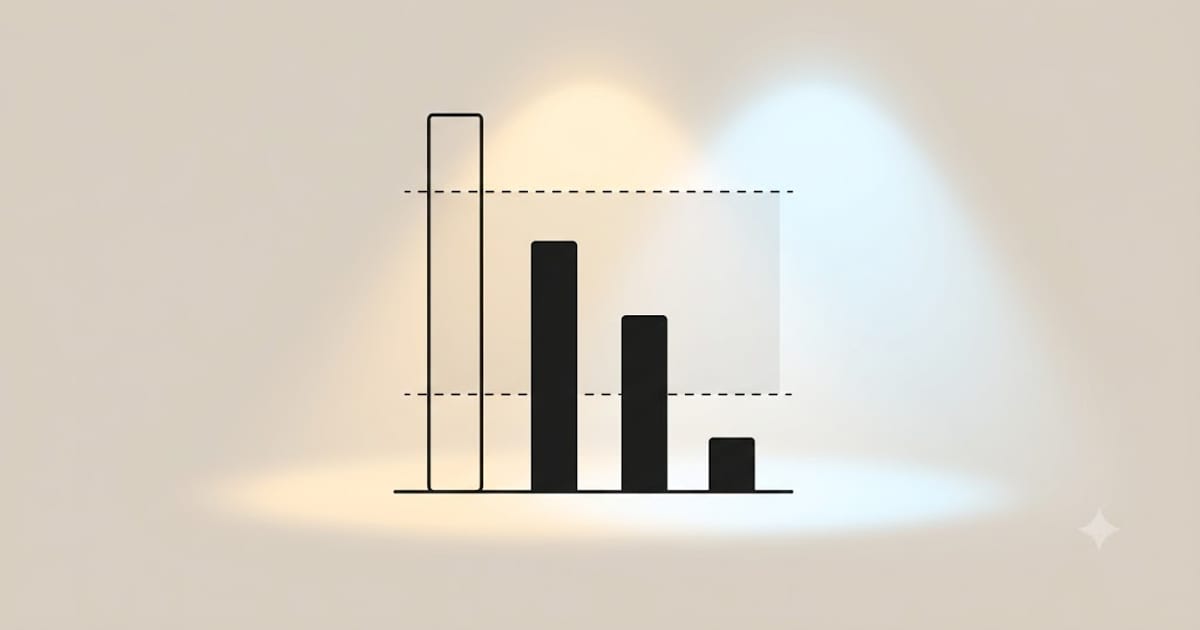 Minimum Load on an LED Dimmer: Why Three Bulbs Isn't Enough
A dimmer that flickers only at low brightness usually has too little connected to it. Three LED bulbs can total less than a dimmer needs to regulate at all.
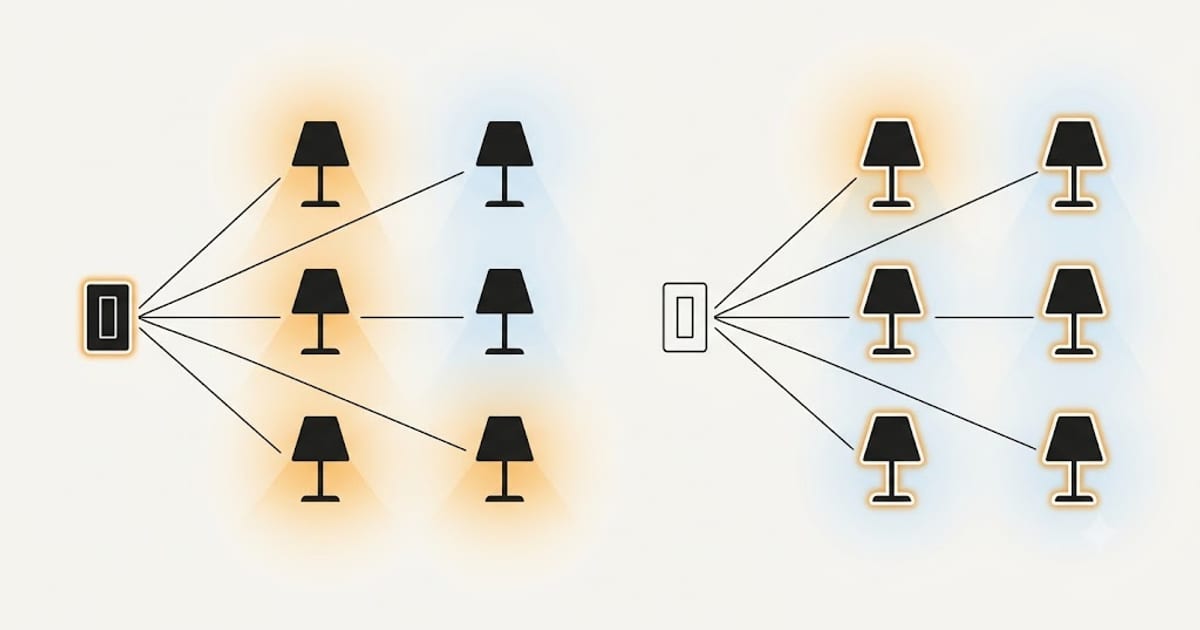 Smart Bulb or Smart Switch? Count the Fittings
The choice comes down to arithmetic and one flaw. Smart bulbs stop working the moment somebody uses the wall switch, and somebody always does.
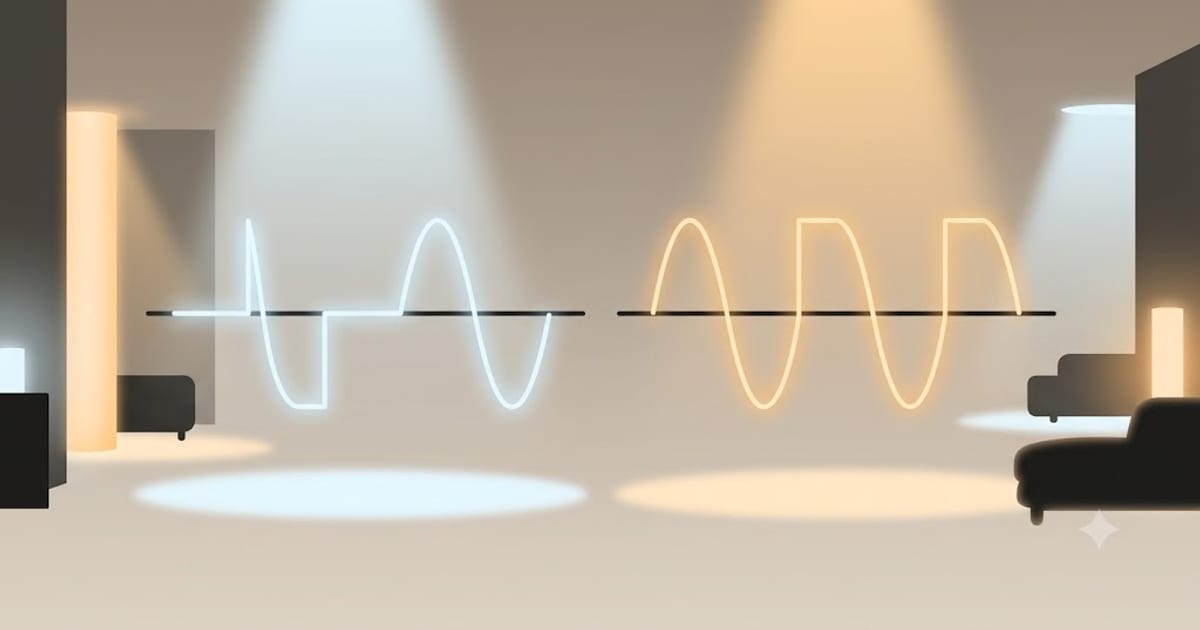 Trailing Edge vs Leading Edge Dimmers: Which One LEDs Want
The two types chop the mains waveform at opposite ends of each cycle. That difference decides whether your LEDs dim smoothly or buzz and flicker.
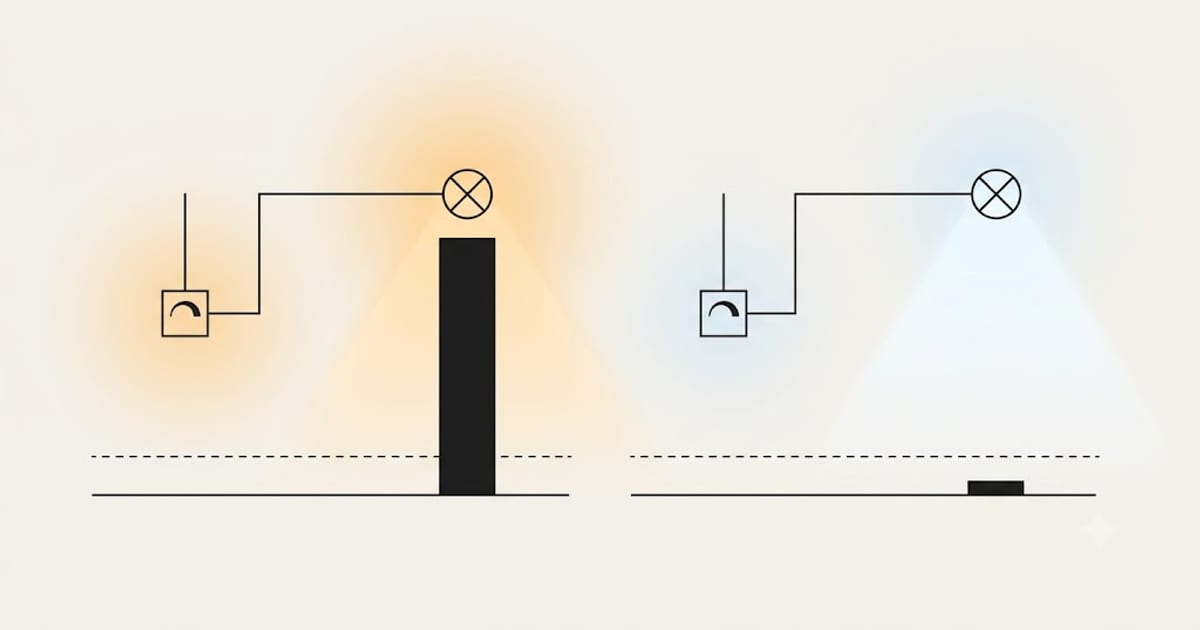 Why LED Lights Flicker When Dimmed — and the Fix Order
The dimmer is usually not broken and the bulbs are usually not faulty. They were designed for each other's opposites, and there are four fixes worth trying in order.