Color Temperature
Color temperature is measured in kelvin, and lower numbers are warmer. It is independent of brightness, and confusing the two is the most common lighting mistake there is.
2700K is the color of an incandescent bulb. It reads as relaxed and belongs where people wind down. 3000K is slightly crisper — the usual choice for kitchens and bathrooms. 4000K reads as neutral daylight and belongs in workshops, garages and utility spaces. 5000K and above is task lighting, and in a living room it reads as an office.
The real mistake is mixing them in one sightline
A 2700K lamp beside a 4000K downlight makes both look wrong, and no amount of brightness fixes it. The eye is very good at spotting the inconsistency and very bad at saying what is wrong.
If a room has fittings from different eras, matching color temperature does more for it than replacing any single fixture.
CRI is the number nobody quotes
Color rendering index describes how accurately a light shows color, against a reference of 100. Cheap LEDs sit around 80; good ones reach 90 or higher.
At CRI 80 a kitchen makes food look gray and a bathroom makes skin look ill. It is the specification most worth paying for and the one least often printed on the front of the box.
Warm dim, and why incandescent still feels different
Incandescent bulbs get warmer in color as they dim — the filament cools. Most LEDs hold their color temperature all the way down, which is why a dimmed LED can feel oddly clinical. Fittings marketed as "warm dim" replicate the shift deliberately, and in a living space it is worth the premium.
5 articles
 Colour Temperature Chart: Every Kelvin Value and Where It Goes
The scale runs backwards from intuition and the useful range is narrower than the chart suggests. Here is every value, what it reads as, and where it belongs.
 Bedroom Colour Temperature: 2700K, and Why the Evening Decides It
A bedroom is the one room where colour temperature is not a decorating decision. Blue-rich light in the evening delays sleep, and the effect is measurable.
 Where 5000K Belongs — and the Four Rooms It Ruins
5000K is not a brighter bulb, though it is sold as one. It is a colder one, and the rooms where that helps are the rooms where you are inspecting something.
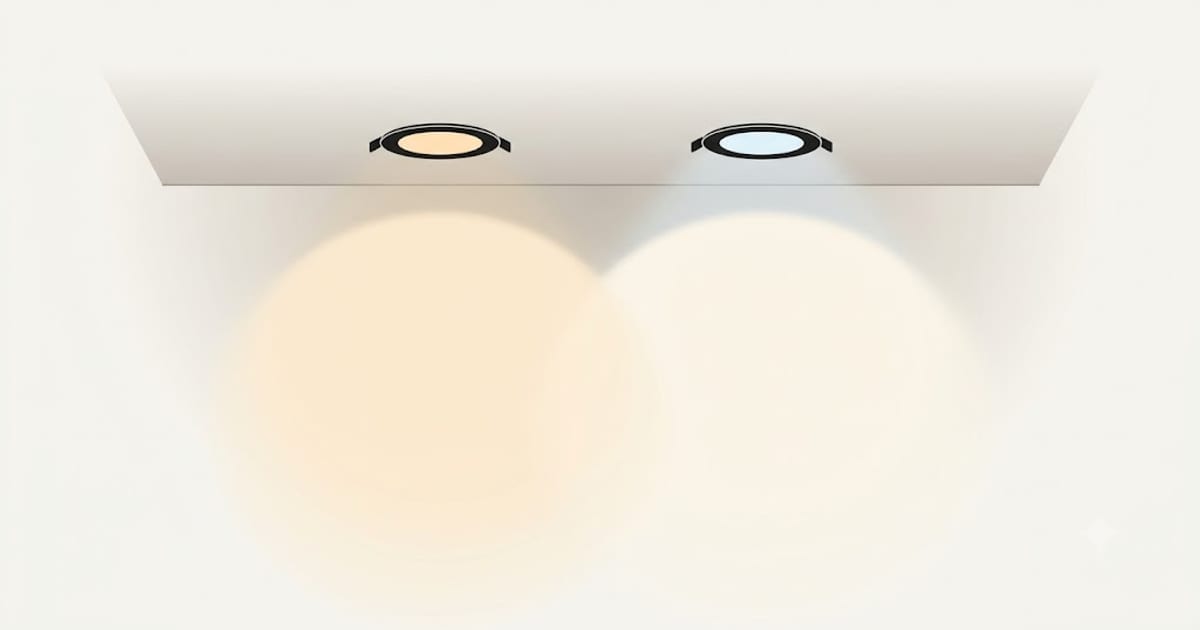 2700K vs 3000K: A Difference You Only See Side by Side
Shown separately, almost nobody can tell 2700K from 3000K. Shown together, everybody can. That single fact decides how you should buy them.
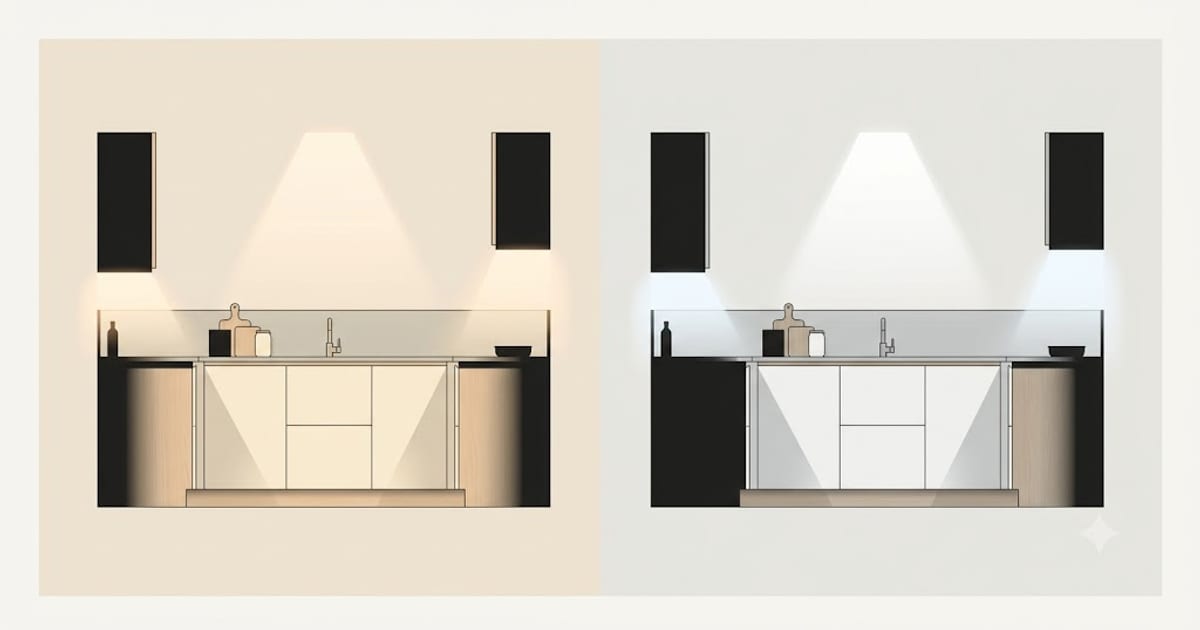 3000K or 4000K in a Kitchen? Look at the Worktop, Not the Chart
Most advice picks a number and defends it. The honest answer is that 3000K and 4000K are both correct, in different kitchens, and the deciding factor is what the light lands on.