CRI & Light Quality
CRI is a single number describing how honestly a lamp renders color, measured against daylight on a scale to 100. Most household LEDs ship at 80. Better ones reach 90 or higher. The gap sounds small and is not.
What makes it confusing is that the number everyone quotes — Ra — is an average of only eight test colors, all of them muted pastels. Saturated colors are not in the average at all.
R9 is the one CRI leaves out
R9 is deep red, and it sits outside the Ra calculation. A lamp can advertise CRI 80 with an R9 close to zero, which is why food, wood, brick and skin can look flat and gray under a bulb whose specification looked acceptable.
This is why the CRI 90 recommendation is not fussiness in kitchens and bathrooms. Raw meat, a cutting board, a face in a mirror — these are exactly the surfaces where red matters, and exactly where an R9 of zero is visible without any instrument.
Where color barely matters — a garage, a closet, a utility room — CRI 80 is a sensible saving.
Higher CRI costs light
Rendering color faithfully means letting through wavelengths the eye is not very sensitive to, so a CRI 90 lamp typically produces fewer lumens per watt than a CRI 80 lamp of the same design. You are trading efficiency for honesty. Buy the trade where it shows and skip it where it does not.
Flicker is a specification nobody prints
Every LED flickers to some degree because it runs on rectified AC. Whether you notice depends on the driver. Cheap drivers produce deep modulation that some people register as eye strain or headache long before they consciously see it.
You do not need a meter to screen for it. Point a phone camera at the lit bulb and look for banding on the screen, or wave a pencil under it and watch whether the blur is smooth or breaks into distinct copies.
"25,000 hours" is not a failure point
That figure is almost always L70 — the point at which the lamp still works but has dimmed to 70 percent of its original output. It is a fade rating, not a lifespan. And it says nothing about the driver, which is usually what actually fails first.
5 articles
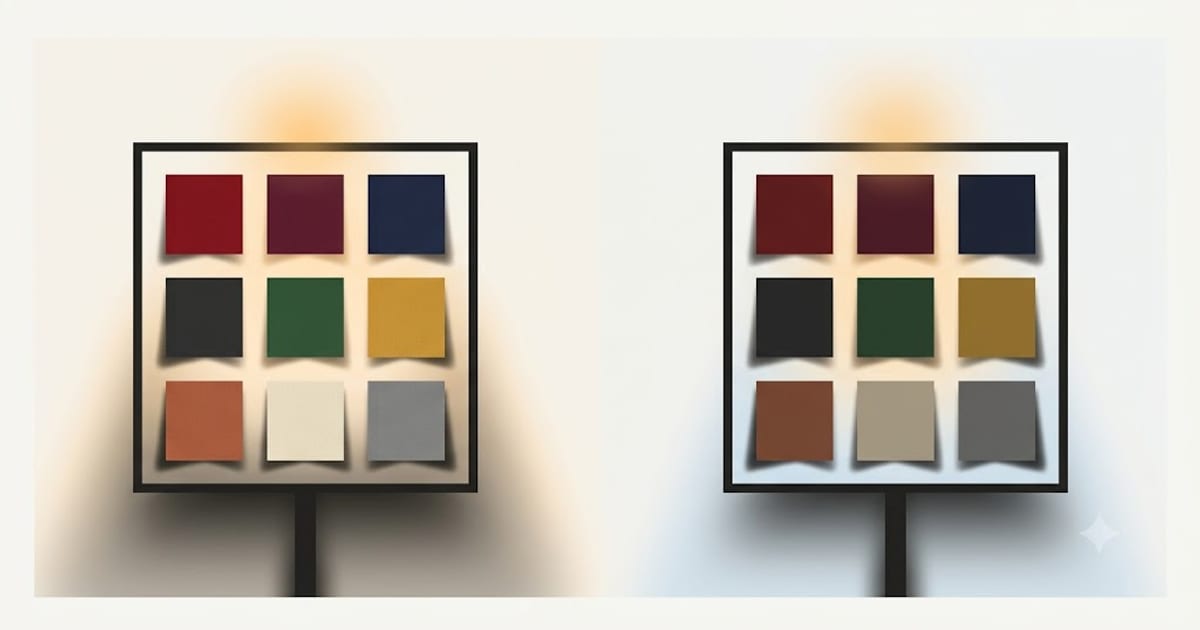 CRI 90 vs 80: What the Ten Points Actually Cost You
Ten points on a hundred-point scale sounds marginal. It is the difference between a room where the colours look right and one that feels vaguely tired.
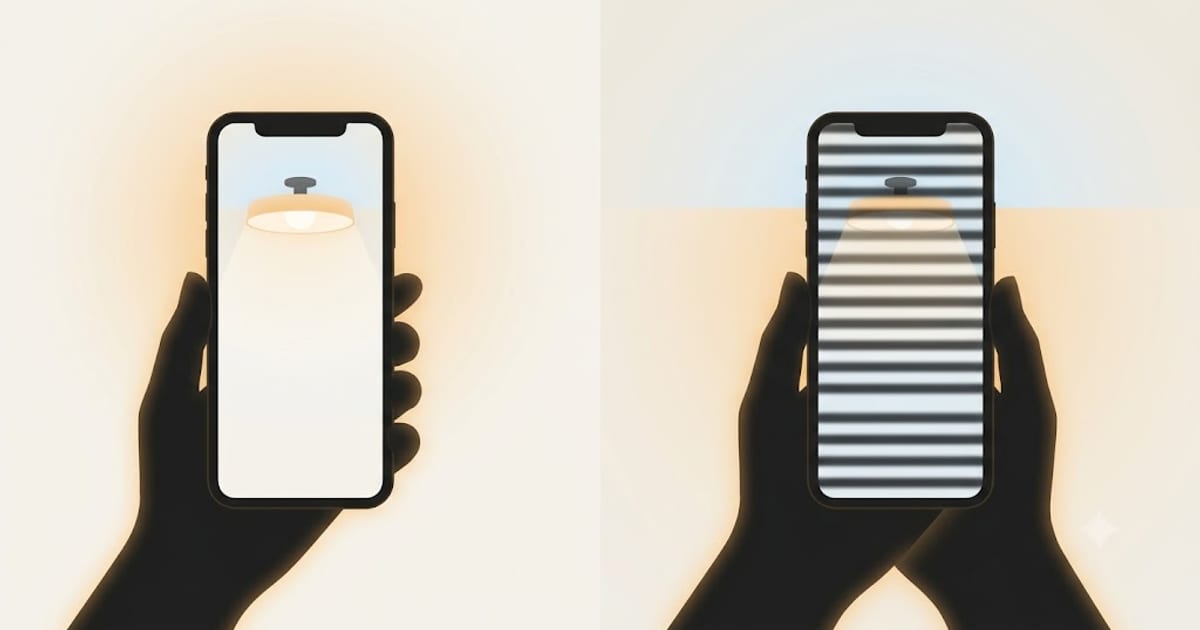 Flicker-Free LED Bulbs: How to Spot Them Without a Meter
You do not see most LED flicker — you feel it, as eye strain by the end of the evening. Two tests with things you already own will find it.
 LED Bulb Lifespan: What 25,000 Hours Actually Promises
The hours figure on the box is a brightness measurement, not a failure measurement — and the thing that actually kills LED bulbs is not on the box at all.
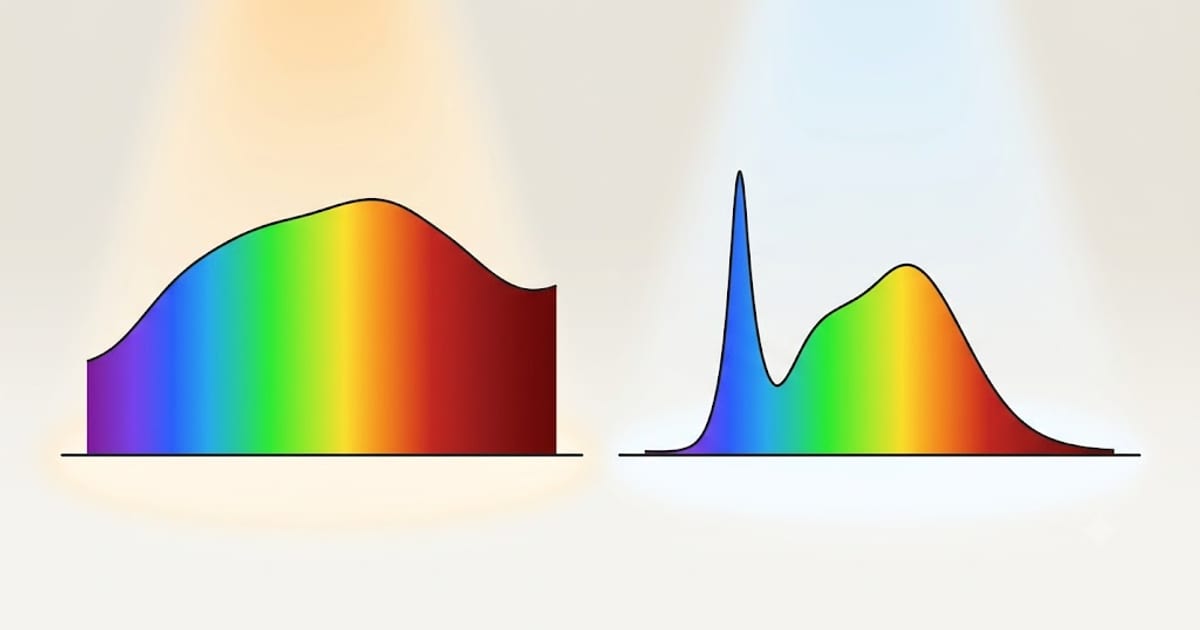 R9 Explained: The Colour CRI Leaves Out
The CRI number on the box averages eight muted pastels. Deep red is tested separately, reported rarely, and is the single colour a home depends on most.
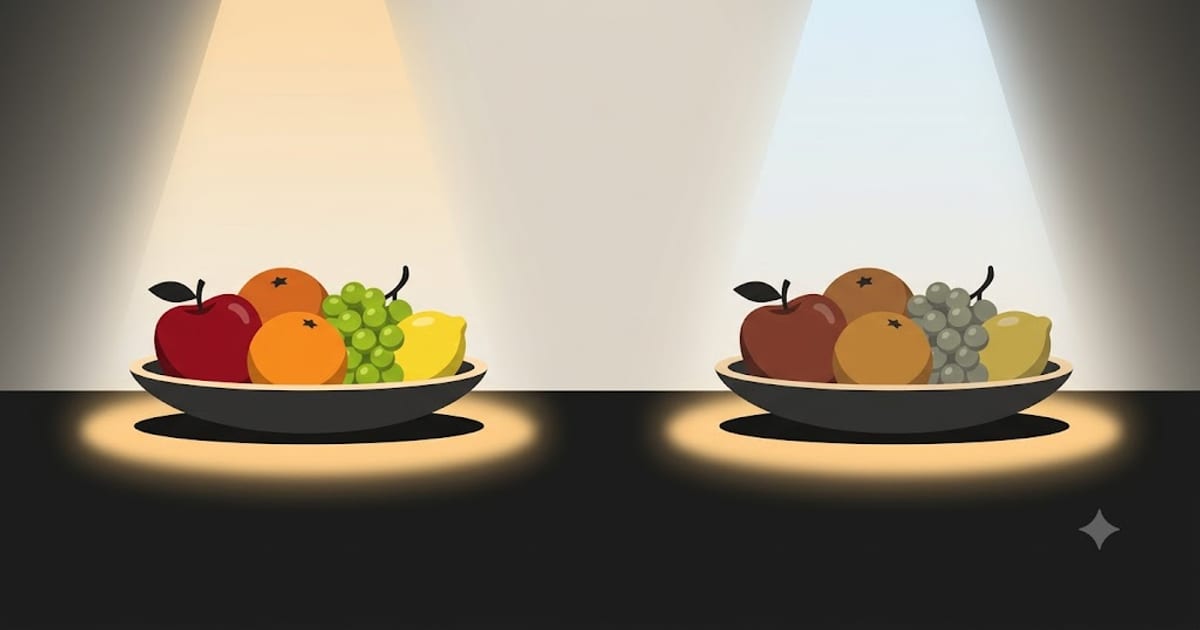 What CRI Do You Actually Need at Home? 90, and 80 Where It Doesn't Matter
CRI is the specification that changes a room most and gets checked least. It is not the same as colour temperature, and the headline number hides the part that matters.